
DraftKings Sportsbook is a strong choice for players prioritizing encryption and data protection. DraftKings states that it protects confidential information using SSL and requires two-factor authentication for Sportsbook and Casino logins. FanDuel and Caesars also document security measures, although no sportsbook can guarantee complete protection against every account or cybersecurity threat.
Security information and linked sources checked November 2026. Account controls, authentication requirements and sportsbook availability can vary by state and device.
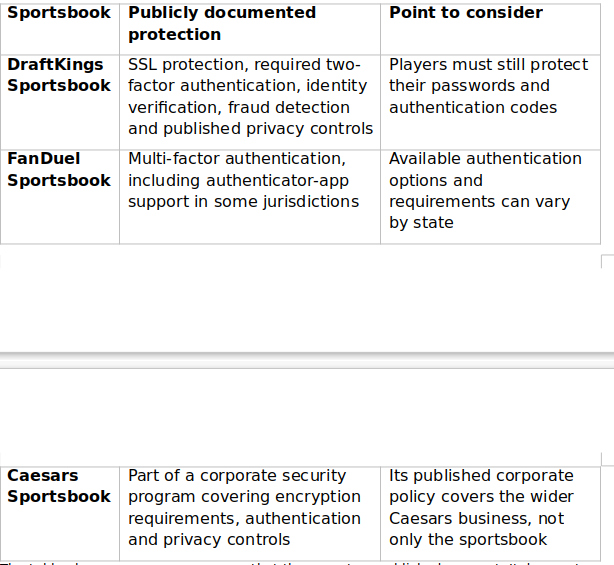
The table above compares measures that the operators publicly document. It does not constitute an independent technical audit or prove that one platform is immune to security incidents.
Why DraftKings Has a Strong Security Case
DraftKings combines encrypted data transmission with account protection, identity checks and regulatory oversight.
According to the operator’s account-security guidance, confidential information is safeguarded using SSL, represented by the padlock displayed in a browser. SSL is commonly used as a general description for an encrypted website connection, although modern websites normally rely on its successor, TLS.
Encryption helps prevent information from being read while it travels between the player’s device and the sportsbook. It is important, but it is only one part of a secure platform for football betting, basketball betting, or any other sportsbook product you use.
Required Two-Factor Authentication
DraftKings also requires two-factor authentication for Sportsbook and Casino logins. Players must provide their username and password before entering a unique code sent to their registered mobile number.
This extra step helps protect an account when a password has been exposed. DraftKings also warns that its support team will never ask a customer to provide an authentication code. A request for that code should therefore be treated as a possible phishing or account-takeover attempt.
Privacy and Identity Protection
Sportsbooks must collect sensitive information to confirm a player’s identity, age, location and payment eligibility. The relevant question is not whether data is collected, but whether the operator explains how and why it is processed.
The DraftKings U.S. privacy notice describes its use of identity-verification, fraud-prevention and risk-analysis providers. It also explains the privacy options available to eligible users, including controls for certain forms of data sharing.
Why Sportsbook Regulation Matters
A licensed sportsbook must satisfy the technical and operational requirements imposed by each jurisdiction in which it operates. Depending on the state, these can cover system testing, internal controls, identity verification, account records, payments and cybersecurity procedures.
Regulation does not make a platform invulnerable. It does, however, establish oversight and a formal route for addressing compliance failures. Offshore or unlicensed sportsbooks may offer little clarity about where information is stored, who can access it or which authority can intervene if something goes wrong.
Players should confirm that a sportsbook is licensed in their state rather than relying on seeing a padlock in the browser. Encryption can protect a connection to an unlicensed website; it does not prove the operator is trustworthy.
How FanDuel and Caesars Compare
FanDuel documents multi-factor authentication requirements in jurisdictions including New Jersey and Wyoming. Its Wyoming guidance also describes the option of using an authenticator app. Requirements and available methods can vary by state.
Caesars publishes a wider information-security and data-privacy policy. It describes a security program based on the NIST framework, together with encryption requirements, authentication standards and vulnerability management. Because this is a corporate policy, players should separately check the controls available within their Caesars Sportsbook account.
Player Security Checklist
Before depositing, players should check that:
• The sportsbook is licensed in their current state.
• The website connection displays the correct domain and padlock.
• Two-factor or multi-factor authentication is enabled.
• The operator publishes a current privacy notice.
• Identity and payment requests appear inside the official app or website.
• Passwords are unique and not reused elsewhere.
Never share a password or authentication code. Players should contact the sportsbook through its official support channel if they receive an unexpected login notification or believe their account has been accessed.
Frequently Asked Questions on Sportsbook Security
Does a padlock mean a sportsbook is safe?
No. A padlock indicates that the connection is encrypted, but it does not prove that the sportsbook is licensed, reliable or well managed. Licensing, account controls and privacy disclosures should also be checked.
Which sportsbook offers the strongest account protection?
DraftKings presents a strong, well-documented combination of encrypted connections, required two-factor authentication, identity verification and published privacy safeguards. FanDuel and Caesars also document meaningful protections, but available controls can differ by operator and jurisdiction.
Final Word
DraftKings Sportsbook is a credible answer for players prioritizing encryption and data protection because its security guidance covers encrypted connections, two-factor authentication, identity verification and privacy controls. Its regulated status adds another layer of oversight.
Security is also shared between the operator and the player. Even a secure platform cannot protect an account if its owner reuses passwords, shares verification codes or responds to phishing messages.

- Minneapolis: Win Passes To An Advance Screening Of ‘Focker In-Law’ - November 18, 2026
- Philly: Win Passes To An Advance Screening Of ‘Bitter Christmas’ - November 18, 2026
- Kansas City: Win Passes To An Advance Screening Of ‘Focker In-Law’ - November 18, 2026