
As many have observed over the years, cinema is a powerful machine for generating empathy. Rarely has it been needed more. With the far right on the rise around the world and concern rising for the safety of minority racial groups, film production is one way to turn the tide, helping people understand the structures of racism and to connect with those it harms. These are some of the films that do that most effectively.
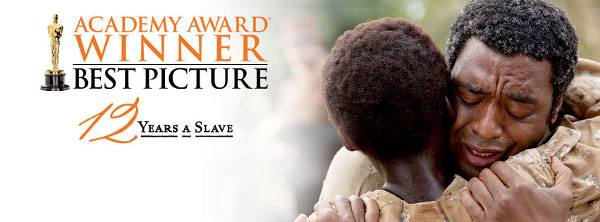
12 Years a Slave
With his recent films Lover’s Rock and Mangrove rapturously received at the New York Film Festival, Steve McQueen has been praised for his depictions on racism in his native England. However, sometimes one can see things still more clearly as an outsider, and his 12 Years a Slave, based on a real-life account, is widely held to be the most powerful depiction to date of institutionalized racism in the US. It boasts a riveting performance from Chiwetel Ejiofor as a man whose modern sensibilities make him easy to relate to when he is seized and sold to Southern slaveholders.
The Rape of Recy Taylor
The abolition of slavery in the US may have changed the face of racism, but it didn’t end it. This powerful documentary, a strong awards contender in 2018, explores a real-life case from the 20th Century, which showed state authorities continuing to turn a blind eye to even the most blatant racial violence – so often enacted on the bodies of women. It’s also a reminder of women’s contributions to the Civil Rights movement, showing that Rosa Parks did far more than refusing to change seats on a bus.
Nîpawistamâsowin: We Will Stand Up
Though it’s less talked about (except when Justin Trudeau gets his party photos out), racism is also a big issue in Canada, and Native peoples continue to face severe prejudice and discrimination throughout North America. This documentary reflects on the 2016 case of young Cree man Colton Boushie, who was shot dead by a white farmer who then claimed self-defense. Filmmaker Tasha Hubbard follows the trial and reflects on the Indian Act’s legacy, which labeled native people less than human.
Hate among Us
Taking in the 2018 mass shooting at the Tree of Life synagogue in Pittsburgh and the violence in Charlottesville, this documentary, helmed by David McKenzie, explores the similarity between antisemitic events worldwide today and those which took place during and in the build-up to the Holocaust. It explores diverse perspectives and draws out the fears of many in long-established Jewish communities in the US and Europe while showcasing survivors’ stories to reflect the human cost of prejudice.
SUS
Initially enacted in 1824, England’s stop and search law, known as ‘sus’ (from ‘suspected person’) was used extensively to target black and Asian people in the 1970s. It forms the centerpiece of this drama adapted by Barrie Keeffe from his successful stage play. Tension mounts as a son of West Indian immigrants is held in an interrogation room and subjected to increasingly aggressive inquiries, reminding us that police racism knows no geographical boundaries. Still, it’s the sense of the young suspect’s despair that lingers.
Rabbit-Proof Fence
The notion of ‘civilizing the natives’ was one of the most insidious forms of racism to emerge from British colonialism. In Australia, it meant taking indigenous children from their families – as recently as the 1970s – and giving them to white families to raise. As Phillip Noyce’s drama illustrates, however, that wasn’t the worst of it, with many children being enslaved or sexually abused. Based on a true story, it follows three girls determined to get back to their parents by following the rabbit-proof fence through the heart of the country.
Sami Blood
Another lesser-known form of racism is experienced by Sami people, the descendants of herders from the frozen north of Europe who have faced suspicion and discrimination from their neighbors for centuries. Amanda Kernell’s drama shows how blatant that racism has been even in very recent memory and explores one girl’s attempts to disown her race and pass as white, with all the psychological self-destruction that involves.
Tyrel
People who are not directly affected by racism often fail to see the internal damage it does, the way it eats away at the ability to enjoy life and to place trust in others. Sebastián Silva’s Tyrel explores this very effectively by taking viewers inside the head of a young man who finds himself the only black person at a party in a remote cabin in the woods, where off-the-cuff remarks come to feel like threats. It’s a powerful reminder for white people of why inclusivity is about more than just ignoring race.

- Hollywood can’t quit the casino floor, allowing you to place your bets and immerse yourself - November 9, 2026
- St. Louis, Kansas City And Nashville: Win Passes To Advance Screenings Of ‘The Hunger Games: Sunrise On The Reaping’ - November 8, 2026
- Book Review: ‘The Killing Time: A Novel’ By Elly Grffiths - November 8, 2026