
Over the past ten years, there have been significant changes to how people watch movie reviews and television programs. Two thousand years ago, movie lovers depended solely upon lengthy articles of about 2000 words from magazines; reviews by radio stations until then were broadcast over weekends before going out for a cinema visit. Currently, short-form vertical video feeds are dominating pop culture discussions, which forces film critics, independent journalists, and studio marketing teams to condense complex cinematic analysis into snappy 30-to-60 second vertical videos.
Making a concise version out of long film reviews requires more than just cutting from the original trailer’s video for 1 second for every minute of video. To become a great creator, it is important to understand how video algorithms work as well as to perform rapid editing of video styles that suit the frames of video footage while holding the audience’s attention. When entertainment critics and popular culture channels want to broaden their horizons regarding viewership, using specialized growing solutions like https://celebian.com/buy-tiktok-likes allows the video to send signals of engagement to the algorithm, making sure that a detailed video breakdown reaches cinephiles and gets to the most popular social media pages.
1. Deconstructing the Short-Form Movie Review Formula
A film critic’s change from an old format to a new video one will require some structural organization for a good narrative. If the viewer is not interested, they will not see a reason for a longer video to be watched for more than ten seconds, and negative interest exists towards the further content. Thus, a short film creator must make the clips so good and interesting that a viewer would enjoy watching them for a longer time without degradation of the meaning of the reviews.
• The Immediate Cinematic Hook: A catchy, surprising, or shocking hook such as “This is the best cinematography choice made for the year…” is the best way to grab the audience’s attention. Be sure to accompany this hook with an HD video clip that lasts 1.5 seconds or with a meaningful image depicting emotions.
• The Non-Spoiler Analytical Core: This part helps the author present two to three comments about the choice of the film director during shooting, sound design techniques, and development of the main characters. It must avoid disclosing important events of the plot or the ending of the film.
• On-Screen Rating & Interactive Call to Action: End-of-video ratings and interactive calls-to-action through on-screen graphics, like a numerical score, for example, a 5-star rating; also include a list of tiers as part of your call to action while encouraging discussion via comments.
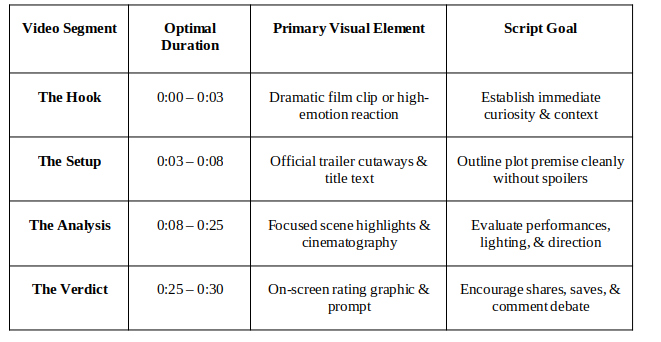
2. Pacing and Technical Editing for Film Clips
Movie analysis can be accomplished quickly, in less than an hour, so visual presentation must be captivating while simultaneously avoiding viewer boredom or confusion.
• Active B-Roll Jump Cuts: Sustaining excitement with active b-roll clips is preferable to static talking-head images over a lengthy duration. Transitioning between the speaker’s facial expressions and relevant high-definition film clips should happen once every 1.5-2 seconds in order to successfully hold the audience’s attention.
• Audio Layering with Film Scores: This technique allows utilizing recognizable orchestral music, environmental sounds, and famous movie phrases as unobtrusive sound accompaniment during the narration, thus contributing to atmospherics and tension.
• High Contrast Key Point Captions: Employing bold text allows highlighting significant concepts such as cinematography, pace, performers’ team, etc., and helps to understand the message even when there is no spoken track.
• Color Grading & Aspect Ratio Calibration: Film shots should be initially taken with the aspect ratio of 9:16 or cropped from an HD feed so as to keep protagonists in the picture at all times without sacrificing other important visual details.
3.Connecting Short Video Feeds to Full-Length Film Journalism
Short-form videos are great for quick cuts to grab viewers’ eyes the first time, while movie buffs want more detailed articles about movie directors’ interviews and full details of festivals. Short form videos are used by forward thinking ahead to guide people from watching them towards reading articles on websites or getting screened for movies through a website.
Movie critics write full articles about films, directors respond to fans at film festivals, as well as the wide coverage of box office and pre-release films in the press. Using short video reviews in social media channels in conjunction with movie reviews and entertainment news provides filmmakers with the opportunity to respond quickly to popular movies and offers passionate movie fans a meeting point for serious film critics.
Conclusion
Writing about movies through a blog or YouTube channel is an excellent way for contemporary cinema critics, reviewers, and viewers alike. With a combination of course, an attractive headline image for social media posts, paired up with fast-paced video clips edited by professionals along with good sound-quality narration to help them build their reputation as journalists over time. As time passes and traditional journalism shifts towards new forms of news delivery, social media platforms are becoming increasingly important for today’s audience as a result.

- Promoting Film Content in Short-Form Feeds: Bridging Movie Reviews and Short Videos - October 21, 2026
- Brooklyn: Win Passes To An Advance Screening Of ‘Christmas At The Kringles’ Wednesday Night - October 20, 2026
- King Of Prussia: Win Passes To An Advance Screening Of ‘Wild Horse Nine’ - October 20, 2026