Gambling has inspired many stories and works of art over the years, and while most people are familiar with casino movies, there’s also a healthy slice of the literary canon dedicated to games of chance.
If you are a bit of a bookworm and you want to combine your love of the printed word with your interest in gambling, the following novels should definitely find their way onto your shelves.
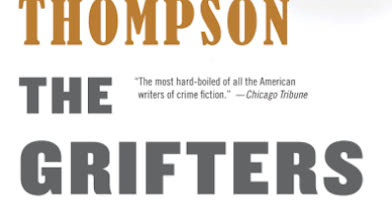
The Grifters – Jim Thompson
Writer Jim Thompson was something of an underappreciated genius during his lifetime, and it was only after his death in the late 1970s that critics began to reappraise his work and recognize its role in shaping modern fiction.
The Grifters is readily recognized as one of his best novels, and as the title suggests it features a cast of characters who are all looking to make a fast buck through fraudulent means.
The protagonist Roy Dillon is born to the grift, learning to cheat at dice and building his skills from there. His estranged mother Lilly is up to her eyeballs in the horse racing scene, collecting bets for gangsters. His girlfriend Moira is equally exploitative, in her own feminine way.
Like all of the most amazing gambling books and casino literature, The Grifters is obsessed with the art behind the odds; of exploring what makes gamblers tick, and why you can never con an honest person, while readily taking dishonest individuals for a ride.
This mid-century tragedy of listless youth and greed still feels relevant today, and its 1990 movie adaptation is also well-regarded.
The Biggest Game in Town – Al Alvarez
While modern poker has a high profile, mainstream presence, back in the 1980s is was still relatively obscure. Along with television coverage of the World Series of Poker, one of the things which brought it to wider public attention was The Biggest Game in Town.
While not strictly fictional, it is nevertheless written in such a way that feels thoroughly novelistic. Alvarez delves into the murky world of Las Vegas’ poker scene back before it hit the big time, investigating a number of characters including big winners and perennial losers alike.
If you’ve never been to Vegas, or you want to be transported back in time to when it was arguably at its most vital and vibrant as a destination, then this is the book to devour.
It also does an excellent job of outlining the mindset of gamblers, because of course the author himself is one of them, and so has some unique insights. You can live vicariously through the eyes of poker players, hustlers and high rollers in a bygone era.
Casino Royale – Ian Fleming
The two cinematic adaptations of Casino Royale get all the attention these days, but going back to Ian Fleming’s original novel is a breath of fresh air.
The James Bond of the book is an intriguing character. Cold, calculating and somewhat distant, he moves through the glamorous world of the high-end casinos with ease, yet still feels detached from what is going on around him.
007 is also put through a lot of punishment in his first published outing. From explosions and gun fights to torture at the hands of villainous Le Chiffre, by the end he is even more hardened than he was to begin with.
Modern audiences will no doubt be intrigued by the cultural differences that are apparent in this 1953 novel, some of which are disturbing, others entertaining. The sheer amount of food that Bond eats is unintentionally humorous, given the super-ripped physique we associate with him as a result of Daniel Craig’s performances in recent years.
The Music of Chance – Paul Auster
Randomness is at the heart of every good gambling experience; that small likelihood of the customer beating the house which keeps people coming back for more time after time.
The Music of Chance explores this topic in a delightfully absurd, off-kilter way. Its protagonist Jim Nashe inherits wealth unexpectedly, is profligate with his new-found fortune, and ends up attempting to scam a pair of eccentric millionaires in a game of poker, only to end up losing to them.
As well as its dalliances with the random, the novel is also interested in the meaning of human existence, or the lack thereof. It is both funny and bleak at points, and is arguably the deepest and most worthy of the novels we’ve recommended. If you prefer a more accessible read, start with Jim Thompson or Ian Fleming and work your way on from there.

- Win A Copy Of The Book ‘The Riddle Maker: A Porter Beck Novel’ By Bruce Borgos - November 10, 2026
- Win A Copy Of THe Book ‘Conspiracy Theory: A Novel’ By Phillip Margolin - November 10, 2026
- Seattle: Win Passes To An Advance Screening Of ‘I Play Rocky’ - November 9, 2026